
The Heart Donation Advances Shortening the Transplant Wait List

Raymond Lee, MD, director of the USC Heart Transplant Program, shares insights on recent innovations that are transforming heart transplantation.
According to the national nonprofit Donate Life America, there are currently over 4,000 people on the transplant list waiting for a heart. Because demand outweighs supply by a significant margin, most of these patients will wait months or even years.
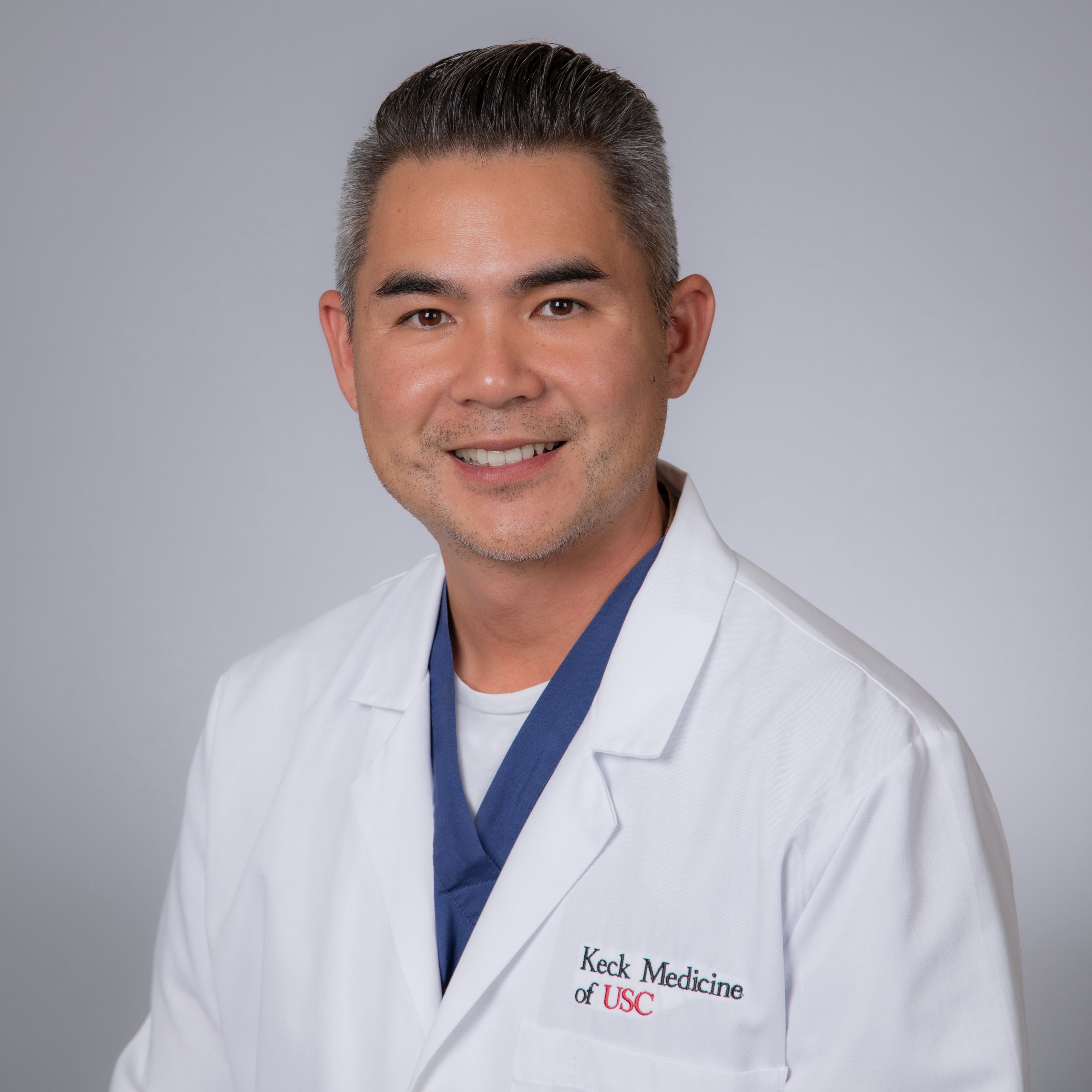
Raymond Lee, MD
However, recent innovations in medical science and technology are mitigating the gap. The problem is still far from solved, but the level of help provided by these developments means the world to heart transplant patients waiting for a match.
Raymond Lee, MD, a cardiothoracic surgeon who serves as the director of the USC Heart Transplant Program, part of the USC Transplant Institute of Keck Medicine of USC, answers questions about the recent evolution of heart donation — and how these changes are saving lives. (The USC Transplant Institute also provides advanced heart, liver and lung transplant care and complex hepatobiliary care to patients living in Southern Nevada at its state-of-the-art facility Keck Medicine of USC – Las Vegas.)
What recent advancements are currently having the biggest impact in the field of heart transplantation?
I’d say right now there are three innovations that are having an enormous impact on the size of our donor pool and the likelihood of recipients actually receiving a new heart in time.
First, temporary artificial heart pumps have gotten a lot better over the past 10 years, dramatically allowing us to stabilize much sicker patients than before — and to support them much longer.
Second, for the patients who are getting a transplant, we have, over the last five to 10 years, been able to grow the donor pool by expanding the criteria for donors, making some hepatitis patients and HIV-positive patients eligible to donate. This has increased the number of organs available to the people who need them.
And third, we can keep these hearts going with perfusion devices that are coming out, which are also helping with donation after cardiac death, which we call DCD.
Regarding the heart pumps, are you talking about ECMO, LVAD or that whole family of technology?
All the machines that you go home with. They’re much more biocompatible and stable than what we used to be able to offer.
There’s something else we’re using that very few centers in the country are offering: We can create a total artificial heart using two LVAD devices, one on the right side and another on the left side. This is for a subset of patients who can’t get transplanted but have full biventricular failure. That used to mean death without a transplant, so this has been a great advancement.
How do these technologies impact the survival rate of cardiac patients who need a transplant?
I’d say that historically those patients have had a very high one-month mortality rate, but at Keck Medicine, we can typically help patients survive for about a year. This gives the patient considerably more time to wait for a heart.
When it comes to expanding donor eligibility, what has made it possible for hepatitis patients and HIV-positive patients to start donating again?
We didn’t always have medications to effectively treat these infectious diseases, but now we do, and it’s a different world for people who have lived with these conditions. Hepatitis B is highly treatable, and hepatitis C can be cured. HIV patients can reach a certain viral load, making it possible for them to safely donate to recipients who are also HIV positive.
What about donation from cardiac death patients?
It used to be extremely difficult to keep a heart and other organs healthy through the cardiac death process, but ECMO and other forms of perfusion are able to do the work of the heart, making it possible for all of the organs to keep receiving oxygen.
We use something called normothermic regional perfusion (NRP), which keeps warm, oxygenated blood flowing through all of the donor’s organs to help keep them healthy through cardiac death. It also makes it possible to reanimate the heart after death and to keep blood pumping through the chambers.
There are also perfusion devices designed specifically for organ transplant that allow us to keep hearts healthy outside of the body for hours at a time. Soon, cold perfusion will be available, which will be especially helpful for transit. If anything should happen to the pump during transport, the cold temperature will continue to preserve the heart until the pump can be fixed.
What are some changes you’ve noticed in your day-to-day practice as a result of these innovations?
Because we’re able to do all these new procedures and new techniques, we’re constantly evolving at a very fast rate. The technology evolves faster than the practice of medicine sometimes.
But the most exciting change? Being able to offer life-saving treatment for an ever-increasing number of our patients.
USC Transplant Institute
At the USC Transplant Institute, our experts provide comprehensive, personalized care for transplant patients and living organ donors. The USC Transplant Institute also provides advanced heart, liver and lung transplant care and complex hepatobiliary care to patients living in Southern Nevada at its state-of-the-art facility Keck Medicine of USC – Las Vegas.
Visit our Provider Portal today to refer a patient.